Wednesday, 27 June 2012

All About Minerals

    The second lesson we had was all about Minerals and Rocks, again it was a refresher for me because the last time I encountered it was during my 3rd year in high school. It was also a great learning to browse and learn again Science as well as to review past learnings and turn them into a new one which we can apply into our learnings in life.


Literally, what is Matter?
              
              Matter is anything that takes up space and has weight. It also makes the Periodic Table which consists of over one hundred elements. Elements are the basic building blocks of minerals. 
               
             Atoms are the smallest particle of matter that retains the essential characteristics of an element. It is extremely the small particle that does the combining Protons, Neutrons and Electrons. The nucleaus is the central part of an atom and  contains protons and electrons. Protons - contains positive(+) electrical charges while Electrons - contains negative(-) electrical charges. The Nucleus is the very dense region consisting of protons and nucleus at the center of an atom.
                
Why Atoms bond?
              When an atom's outermost energy level does not contain the maximum number of electrons, the atom is more likely to bond
             Isotopes is the number of protons and neutrons in the nucleus of an atom. An ion is an isotope that gains and losses electrons.

Types of Chemical Bonds
             
              a.) Ionic Bonds - form between positive (+) and negative (-) ions.
              b.) Covalent Bonds - form when atoms share electrons.
              c.) Metallic Bonds - form when metal ions share electrons.
            
                Minerals are any naturally occurring inorganic solid that possesses an orderly crystalline structure and a well defined chemical compositions. Minerals are formed through Crystallization from Magma, from Precipitation, from pressure and temperature and from Hydrothermal solutions.

                Mineral Groups can be classified based on their compositions

                        - Silicon and Oxygen combine to form a structure called Silicon-Oxygen tetrahedron.


2.) Carbonates
                 - minerals that contains the elements carbon, oxygen and one or other more metallic elements.
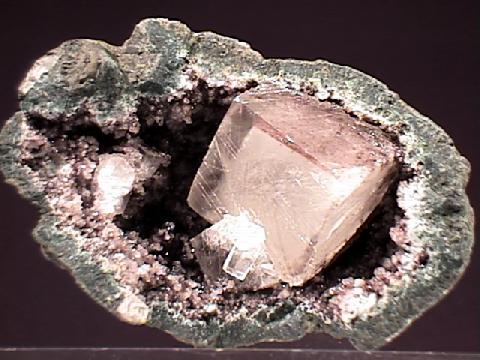
                          
3.) Oxides
                 - minerals that contains the element Oxygen.
                             
4.) Sulfates and Sulfides
                 - minerals that contains the element Sulfur.
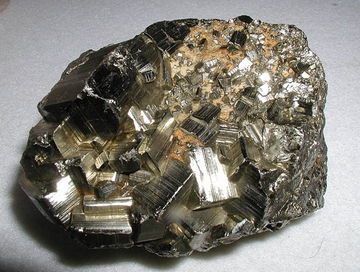


 5.) Halides
                - minerals that contain a halogen ion plus one or more other elements.
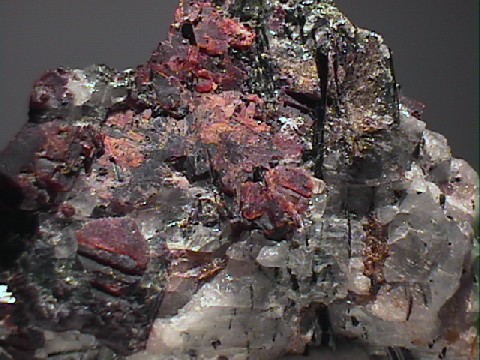
                           
6.) Native Elements
                - minerals that exist in relatively pure form.


                                       Properties of Minerals     

1.) Colors - small amount of different elements can give the same mineral                   different colors.

2.) Streak - the color of the mineral in its powdered form.

3.) Luster  - is used to describe how light is reflected from the surface of a mineral.

4.) Crystal Form - visual expression of a mineral's integral arrangement of atoms.

5.) Hardness - a measure of the resistance of a mineral to being scratched.

6.) Cleavage - is the tendency of a mineral to cleave or break.

7.) Fracture - uneven breakage of mineral.

8.) Density - property of all matter that is the ratio of an object's mass to its value.


                      And these were the learnings that I have gained in our Science class. The lesson/s were very well explained by our professor, Mr. Crisencio Paner (click for more informations)


Tuesday, 19 June 2012

Natural Science : Introduction


 I am a college student taking up Fine Arts: Major in Advertising in University of Sto. Tomas. I never thought that I would encounter Science as a part of my curriculum this  year. But since the last time I encountered it was during my High school years and I never saw it coming. It was simply unexpected. But  waking up early in the morning,having high expectations and waiting for our first official day to explore the Earth was quite something. It felt like I was having a brand new start since it will be my first time dealing with it again in my college life. So, to have a positive input, I prepared basic things needed in a Science class. Simply, a pen and a notebook.

At first, since I’ll be dealing with Science again, I’ve thought that maybe there will be a part of the class where it will be boring and I will be sleepy, since I’ve experienced taking it up in my High school years.  Having different thoughts flowing in my mind, I really hoped that our professor will teach us great thoughts and learning that we could apply to our course.

And by the time our professor went to the room, he introduced Earth Science. While listening to introductions,I found it really interesting since it features the beginning of the Earth. Having a prepared pen and a notebook was not that bad at all.


Earth Science is the name for all sciences that collectively seek to understand the Earth and its neighbours in space. It is also concerned with the structure, age, origin and the other aspects of the earth.  It includes Geology- the study of the Earth (rocks, minerals, mountains and canyons).Oceanography - the study of the Ocean (Ocean environment).Meteorology - the study of the atmosphere and processes that produce weather and climate.Astronomy- the study of the universe. It is also said that the Earth and the other planets formed at the same time.

The Layers form on Earth was due to the decay of radioactive elements and the heat upon high-velocity impacts that caused the temperature to increase. That resulted the lighter rocky components to float outward toward the surface. The Big Bang Theory takes place. The universe was once in an extremely hot and dense state which expanded rapidly. This rapid expansion cause the universe to cool and resulted in its present continuously expanding state.


The Earth has Four Major Spheres. The Hydrosphere is about 71% of the Earth’s surface and holds about 97% of Earth’s water, the ocean is its most prominent feature. The Atmosphere is the thin tenuous blanket of air that surrounds the Earth. The Biosphere is the whole area of water, air and land that contains life.  The Biosphere is concentrated near the surface in a zone that extends from the ocean floor upward for several kilometers in the Atmosphere.The Geosphere is the solid aspect of the Earth. This consists of the Crust – the rocky layer of Earth and the thinnest layer of the Earth's interior, which is mostly compose of granite and basalt The Mantle - the thickest layer of the Earth below the crust.  And the Corethe innermost layer of the Earth, it is a very dense interior of the Earth. Plate Tectonics is the theory that proposes that the Earth’s outer shell consist of individual (1) plates that interact in a various way. Plates collide and the theory builds upon Continental Drift.


Upon Determining Location, it is consists of two (2) locations: Latitude and Longitude. Latitude- is from the distance from North to South of the equator while Longitude - is from the distance from East to West from the Prime Meridian. Longitude is also the one that dedicates the time. The Environment (water, air, soil and rock) is the one that surrounds and influences organisms. Our resources came from water, air, rock and soil. Resources consist of two (2) different types: Renewable Resources– are from plants, energy from water and wind. While, Non - Renewable Resources – are from fuels and metals; things that cannot be replenished. And having the large expansion of population, which is growing rapidly, the use of minerals and energy has climbed up.

These were all the things that I have learned in my NatSci class, and I also do believe that upon Earth Science and Advertising Arts there is a connection. Connection in a way that Advertising helps to promote and provide information/s about the happening/s of the Earth that could led the people through awareness and orientations that as to what people can do to help our Mother Earth. Advertising can also be use as a promotional tool and a tool that can help our nature to live.