Literally, what is Matter?
Matter is anything that takes up space and has weight. It also makes the Periodic Table which consists of over one hundred elements. Elements are the basic building blocks of minerals.

Atoms are the smallest particle of matter that retains the essential characteristics of an element. It is extremely the small particle that does the combining Protons, Neutrons and Electrons. The nucleaus is the central part of an atom and contains protons and electrons. Protons - contains positive(+) electrical charges while Electrons - contains negative(-) electrical charges. The Nucleus is the very dense region consisting of protons and nucleus at the center of an atom.
Why Atoms bond?
When an atom's outermost energy level does not contain the maximum number of electrons, the atom is more likely to bond
Isotopes is the number of protons and neutrons in the nucleus of an atom. An ion is an isotope that gains and losses electrons.
Types of Chemical Bonds
a.) Ionic Bonds - form between positive (+) and negative (-) ions.
b.) Covalent Bonds - form when atoms share electrons.
c.) Metallic Bonds - form when metal ions share electrons.
Minerals are any naturally occurring inorganic solid that possesses an orderly crystalline structure and a well defined chemical compositions. Minerals are formed through Crystallization from Magma, from Precipitation, from pressure and temperature and from Hydrothermal solutions.
Mineral Groups can be classified based on their compositions
1.) Silicates
- Silicon and Oxygen combine to form a structure called Silicon-Oxygen tetrahedron.

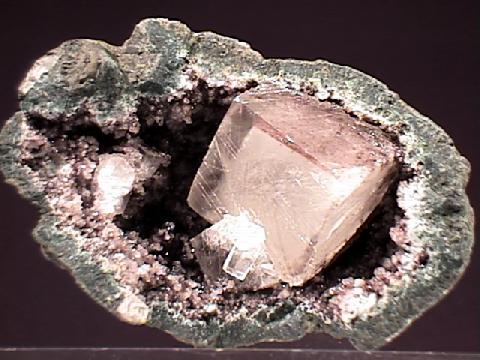
2.) Carbonates
- minerals that contains the elements carbon, oxygen and one or other more metallic elements.
3.) Oxides
- minerals that contains the element Oxygen.

4.) Sulfates and Sulfides
- minerals that contains the element Sulfur.
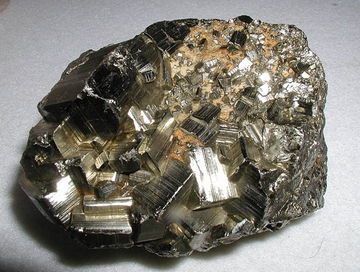
- minerals that contain a halogen ion plus one or more other elements.
6.) Native Elements
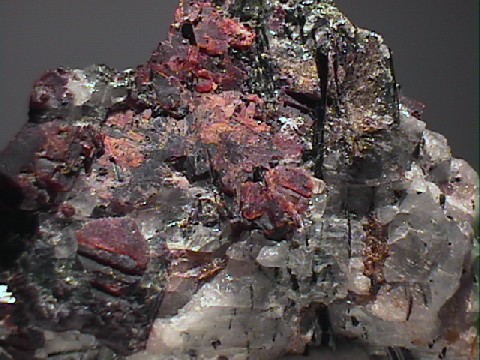
- minerals that exist in relatively pure form.

Properties of Minerals
1.) Colors - small amount of different elements can give the same mineral different colors.
2.) Streak - the color of the mineral in its powdered form.
3.) Luster - is used to describe how light is reflected from the surface of a mineral.
4.) Crystal Form - visual expression of a mineral's integral arrangement of atoms.
5.) Hardness - a measure of the resistance of a mineral to being scratched.
6.) Cleavage - is the tendency of a mineral to cleave or break.
7.) Fracture - uneven breakage of mineral.
8.) Density - property of all matter that is the ratio of an object's mass to its value.
And these were the learnings that I have gained in our Science class. The lesson/s were very well explained by our professor, Mr. Crisencio Paner (click for more informations)

No comments:
Post a Comment